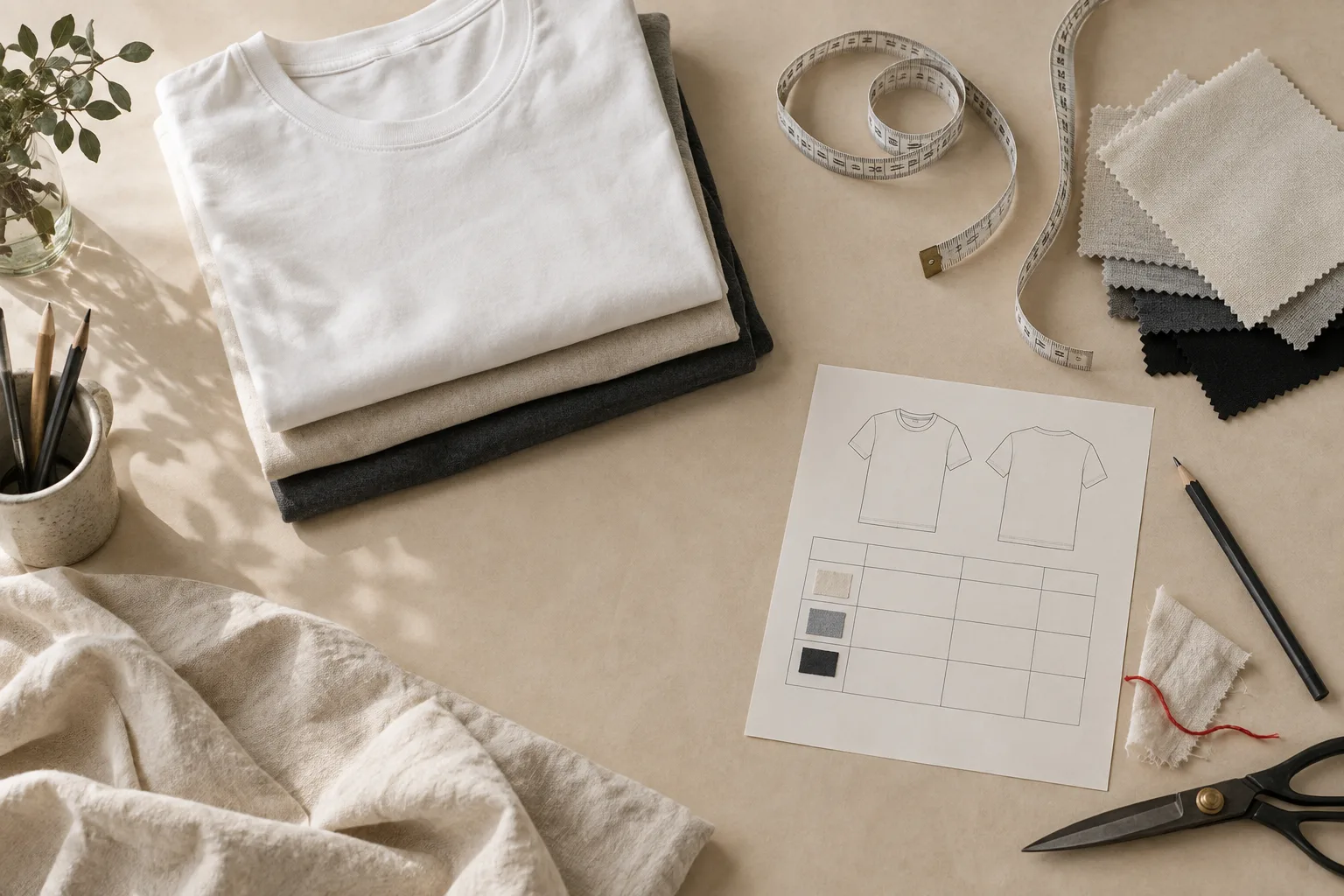
A clothing MOQ is the smallest quantity a manufacturer is prepared to produce under a particular set of conditions. It is not a universal number attached to a factory. It changes with the garment, fabric, colour, construction, trims, decoration and the amount of development required before production can begin.
That distinction matters for a first order. A statement such as “my MOQ is 100 pieces” sounds complete, but it leaves the important split unanswered. One hundred pieces of one black T-shirt is a different production problem from one hundred pieces divided across five styles, four colours and six sizes. The second request creates more patterns, markers, colour approvals, cutting bundles, labels and quality checks even though the final unit count is identical.
Why manufacturers set minimums
Every production run contains work that happens once, whether the order is fifty pieces or five thousand. A pattern must be checked. A sample must be made. Machines may need different folders, needles or settings. Fabric and trims need to be sourced, received and inspected. The cutting room creates a marker and lays fabric. Production planning assigns operators and protects a place in the line.
When the run is very small, those fixed tasks are spread across fewer garments. The cost per piece rises and the disruption to a working line becomes harder to justify. A factory may still accept the project, but it can respond with a development fee, a small-order surcharge, a simpler specification or a higher price per unit. None of these automatically means the factory is expensive. They are different ways of accounting for the same setup work.
The four minimums inside one order
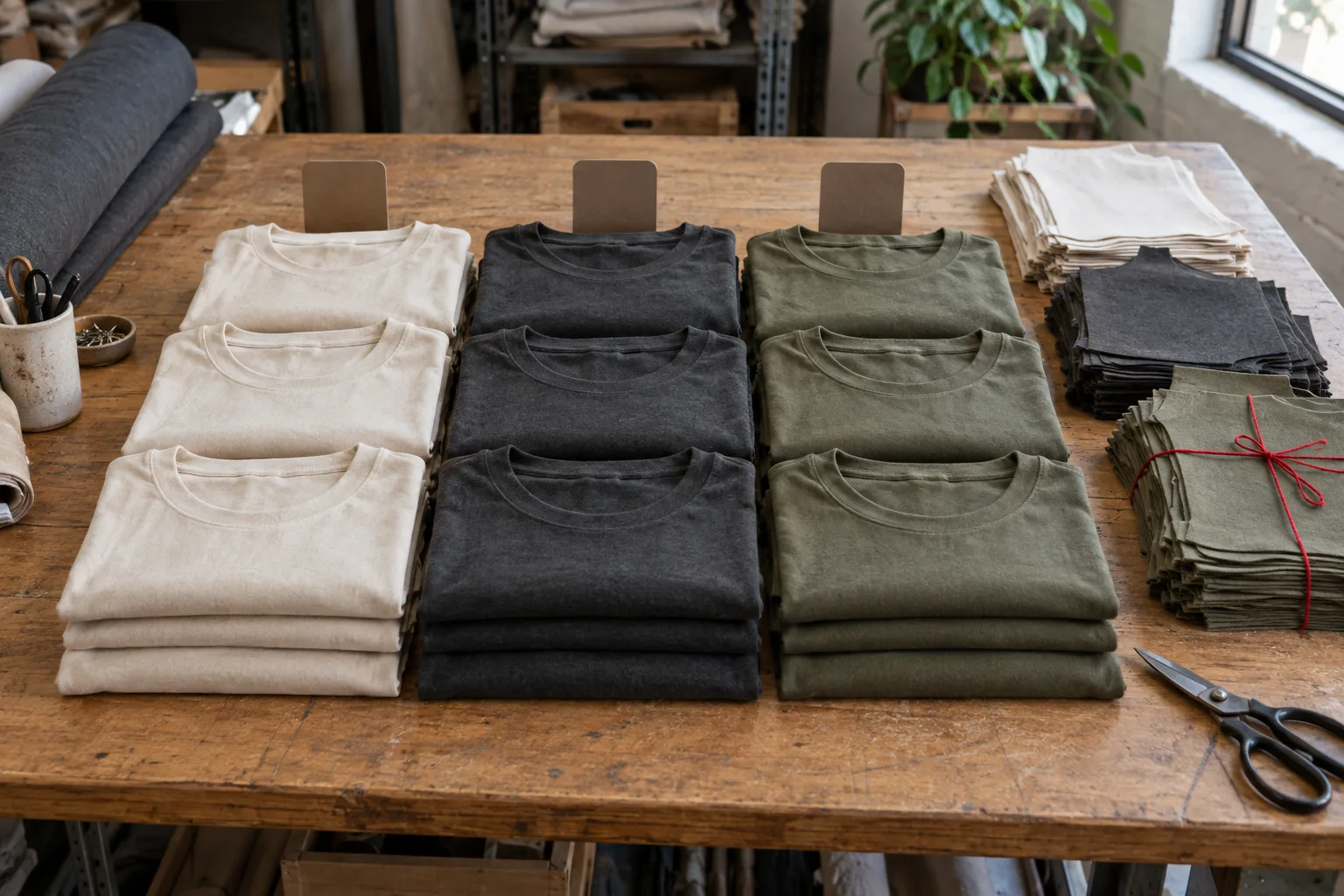
- Factory minimum: the smallest run the production line can handle efficiently for that product type.
- Fabric minimum: the mill or stockist may require a minimum number of metres, especially for custom colour or finishing.
- Trim minimum: zippers, buttons, rib, labels, packaging and custom hardware can each have their own purchase quantity.
- Process minimum: dyeing, washing, printing and embroidery may be priced around a minimum batch, screen or machine setup.
The highest of these constraints often becomes the practical MOQ. A cut-and-sew workshop might be willing to stitch 120 hoodies, while the fabric mill requires enough custom-dyed fleece for 500. The result is not necessarily a 500-piece garment order. You may be able to use a stock colour, reserve leftover fabric for a repeat, share one fabric across several products, or purchase the full fabric lot while producing garments in stages. Each solution has cash-flow and storage consequences, so it should be agreed explicitly.
How to make a smaller order workable
Reduce variation before reducing quality. Begin with one product and one dependable fabric. Keep the construction consistent across colours. Use stock-supported materials and standard trim sizes where they suit the design. If two products can share fabric, rib, thread and labels, explain that relationship in the enquiry. The factory can then evaluate the combined material demand instead of treating every line as isolated.
Be equally disciplined with sizing. A size range should reflect the people you expect to serve, but a first run rarely needs equal quantities in every size. Give the factory a size breakdown rather than only the total. That enables a real marker estimate and exposes sizes whose pattern pieces consume more fabric. If you do not know the ratio, state that clearly and ask for guidance instead of inventing certainty.
What to include in your first MOQ enquiry
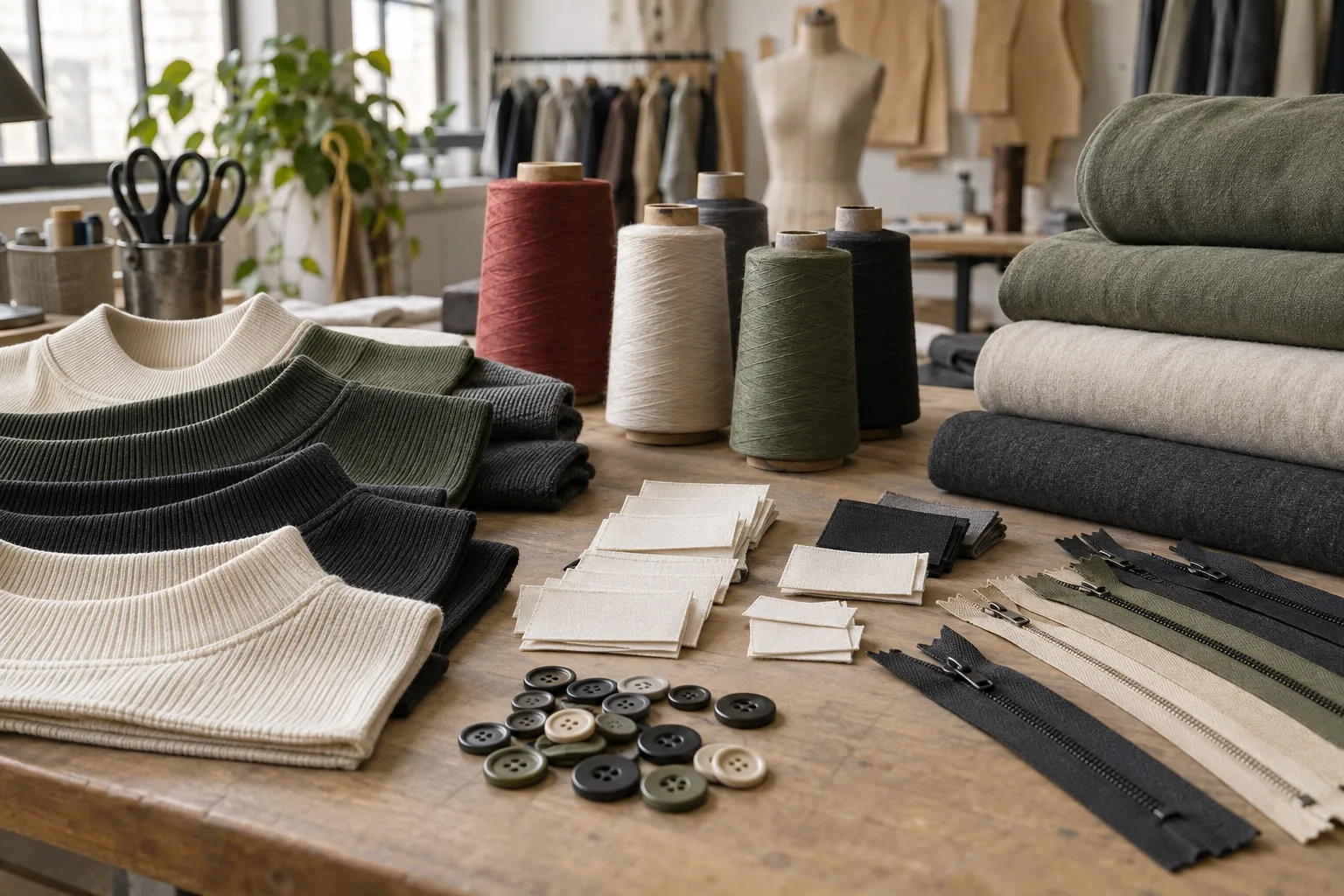
A manufacturer can give a more meaningful answer when the request describes the actual production shape. Name the product, intended fabric, approximate weight, colour count, size range, total quantity and quantity per colour. Add the decoration method, label requirements, packaging expectations, delivery country and target timing. If some decisions are open, mark them as open and identify what matters most.
- Product and construction: for example, oversized crew-neck T-shirt in single jersey.
- Quantity structure: total pieces, number of colours and the expected size ratio.
- Material direction: composition, fabric weight and whether a stock colour is acceptable.
- Decoration and trims: print locations, embroidery, custom labels, hardware and packaging.
- Commercial context: sample requirement, delivery destination, timing and target price range.
Avoid asking only for the “lowest MOQ and best price.” A low number without the product conditions is not a usable commitment, and a price without an agreed specification cannot be compared. A strong first conversation establishes what must remain fixed, what can change, and which minimum is driving the answer.
MOQ is a planning constraint, not a quality signal
A high MOQ does not prove that a manufacturer is better, and a low MOQ does not prove that a manufacturer is flexible in every situation. The number usually reflects equipment, sourcing relationships, line structure and the type of customer the factory is designed to serve. Match the production system to the order you actually have.
Before contacting factories, make the order legible. Separate each style, show its quantities, and identify the variables that can be simplified. That preparation helps a manufacturer explain the real minimum, gives you useful alternatives, and prevents a promising sample from leading to a production plan your budget cannot support.