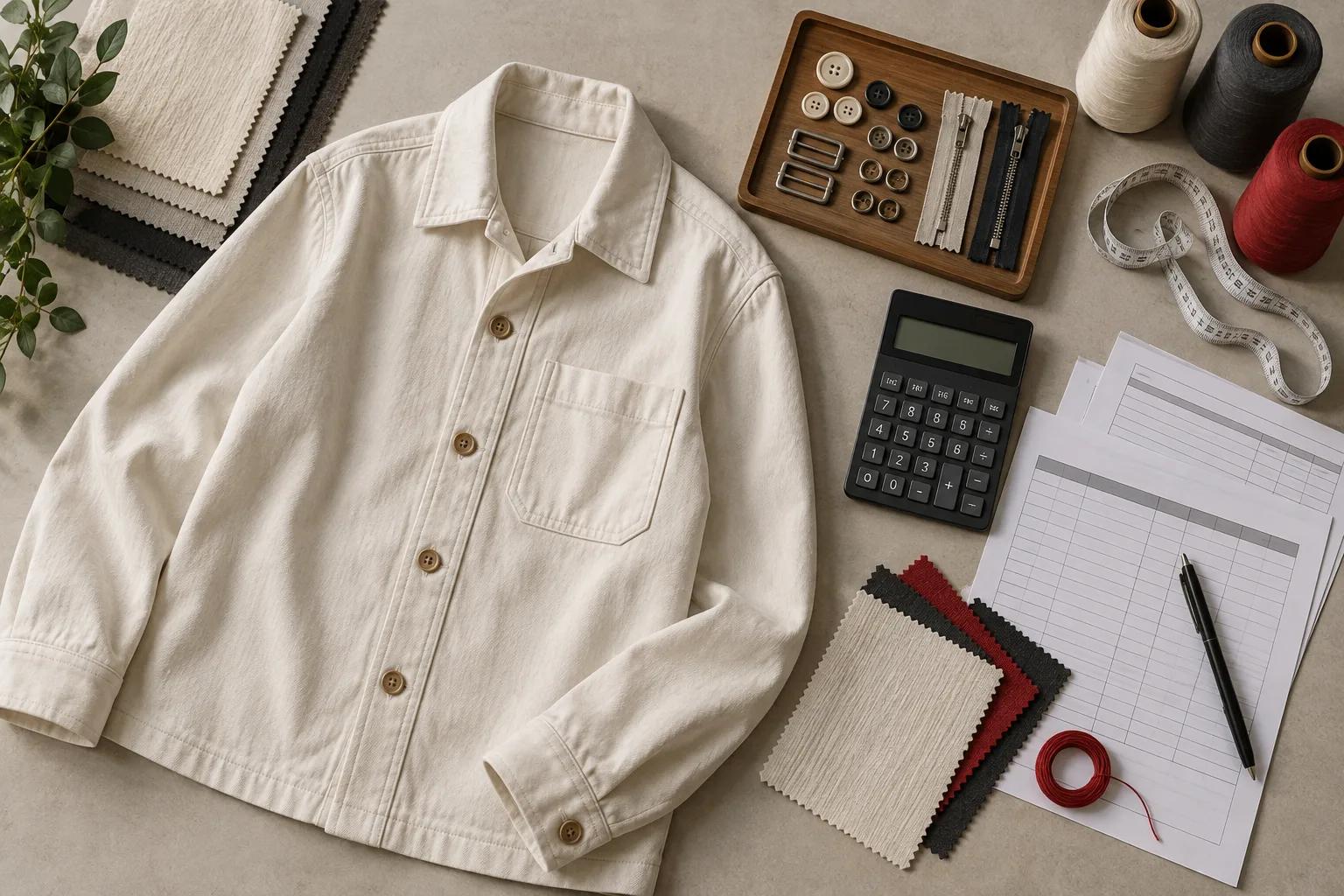
Garment costing converts a product specification and an order plan into a price. The calculation is not simply fabric plus sewing. It combines material consumption, trims, labour, decoration, washing, testing, packing, overhead, waste, commercial risk and the delivery terms attached to the quote.
That is why a factory cannot give a dependable price from the phrase “basic heavyweight hoodie.” The weight, composition, width, colour, fit, seam construction, rib, zipper, print, wash, labels, size range and order quantity all alter cost. A useful quote is a response to a defined version of the garment. Change the version and the quote should be reviewed.
Fabric is usually the largest component
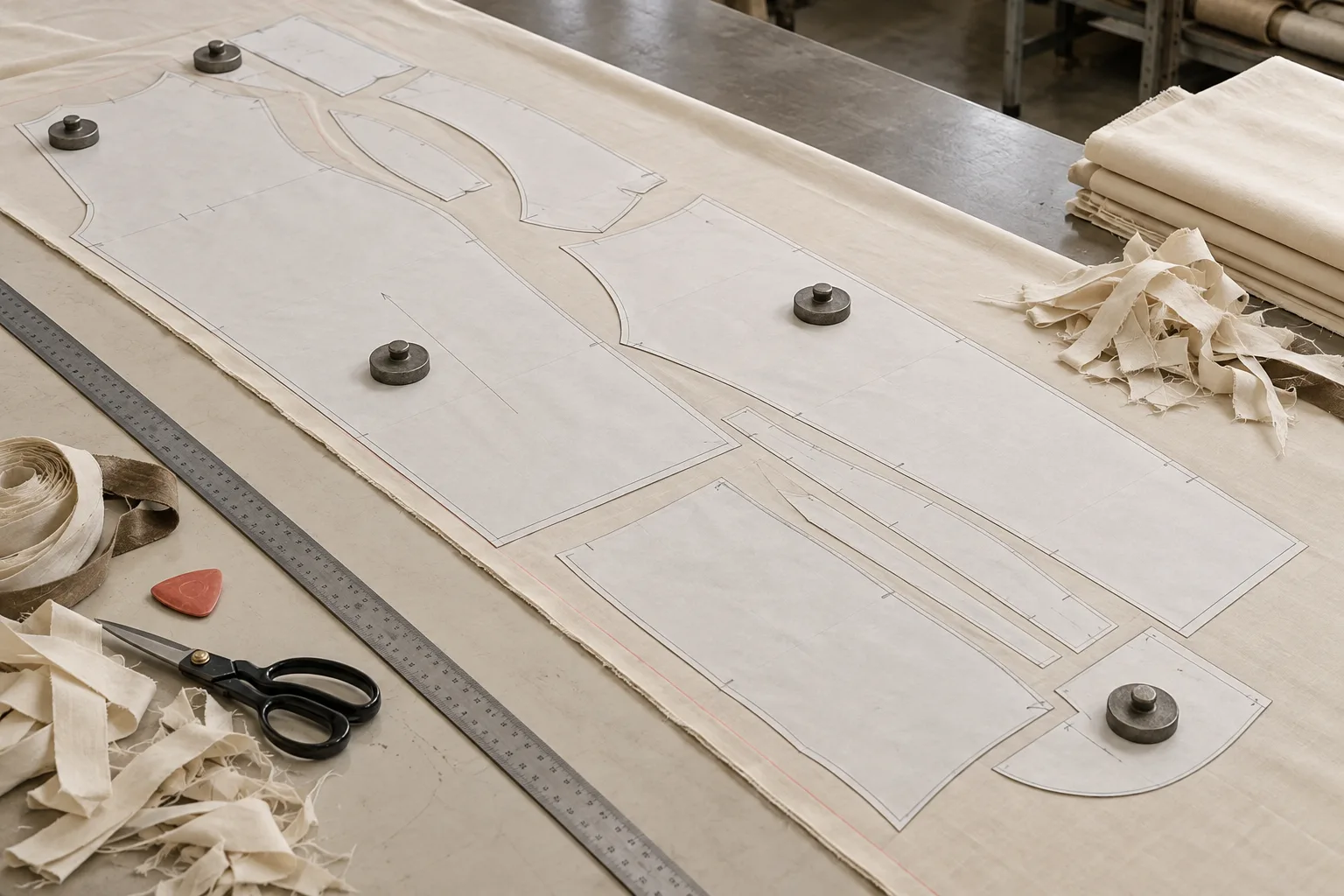
Material cost begins with consumption: the amount of fabric required for one garment at the usable width. A marker arranges pattern pieces across that width while respecting grain, nap, print direction and cutting rules. The result is adjusted for fabric faults, end loss, shrinkage, relaxation and cutting waste. A simple percentage added to an estimated length is less reliable than a marker made from approved patterns.
Price per kilogram can be converted only when the fabric weight and usable width are known. Price per metre still needs consumption. Larger sizes, matching stripes, directional prints, washed finishes and wide silhouettes can all increase usage. If several colours have different dye prices or minimums, they may need separate lines instead of one blended assumption.
The main lines in a garment cost
- Main materials: shell, lining, pocketing, rib, interfacing and any reinforcement.
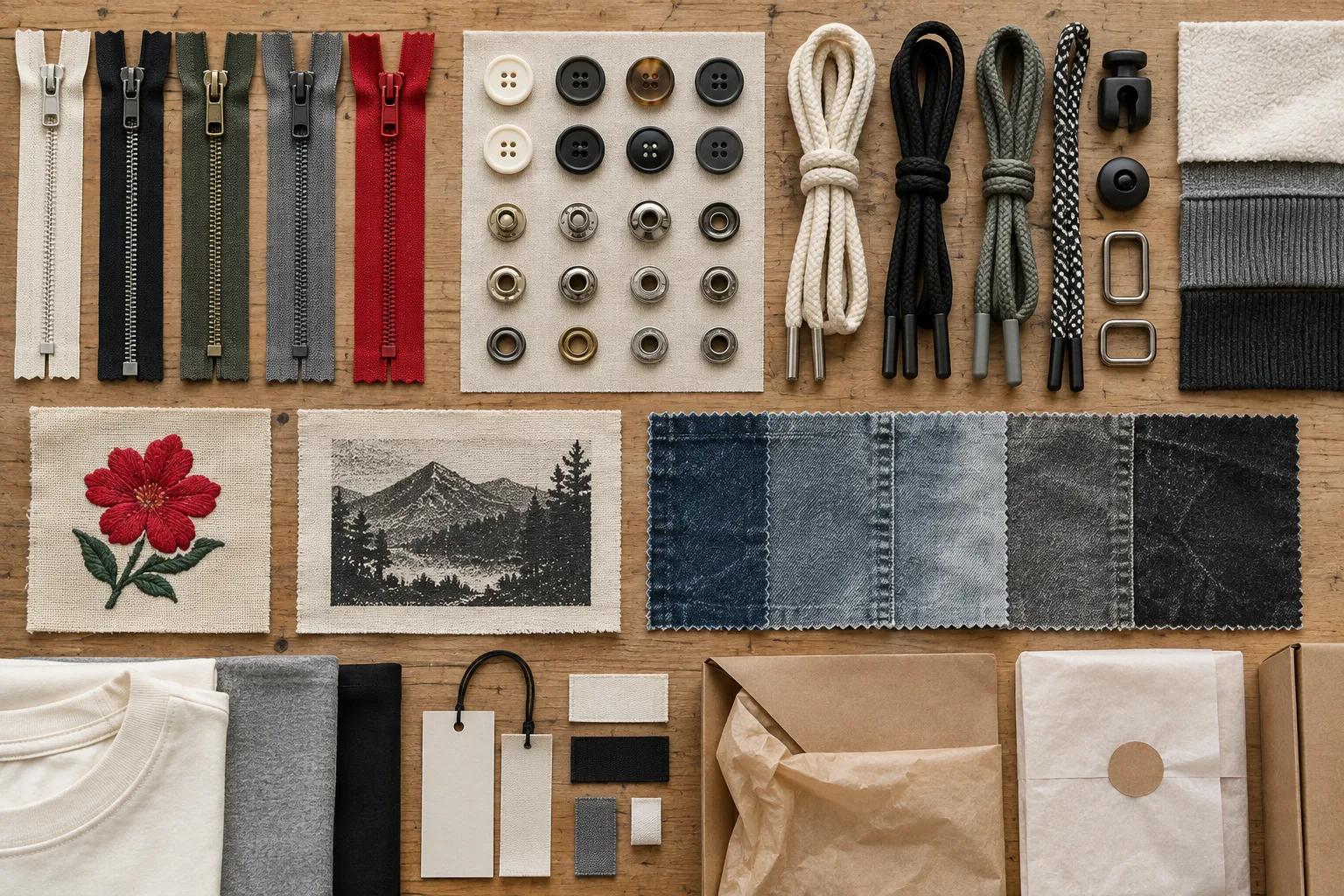
- Trims: zippers, buttons, snaps, elastic, drawcords, labels, thread and hardware.
- Cut, make and trim: spreading, cutting, bundling, sewing, in-line checks and finishing labour.
- Decoration and wet process: print, embroidery, appliqué, dye, wash, distressing and special finish.
- Packing: folding materials, tissue, bags, tags, size stickers, cartons and carton markings.
- Development and compliance: patterns, samples, testing, inspection and certification work where required.
- Overhead and margin: the operating cost, capacity risk and return required to run the order responsibly.
Labour follows operations, not appearance
Two garments that look similarly simple can require different machine time. A clean-finished seam, matched pocket, concealed zipper or bound opening introduces operations, handling and specialized equipment. Factories may estimate labour through standard minute values: each operation receives an expected time, which is multiplied by a labour and overhead rate.
Efficiency changes across order sizes and product familiarity. A line needs time to learn a new style and balance work between operators. Very small runs carry more setup per piece; long runs allow the team to stabilize. This is one reason unit prices often fall as quantity rises, but the curve is not unlimited. Material price breaks, line efficiency and overhead are separate effects.
What is included in the quoted price
The trade basis determines which costs sit inside the unit price. An ex-works quote usually covers production made available at the factory. FOB commonly includes the work required to deliver cleared goods to the named port under the agreed interpretation. CIF and DDP add other freight, insurance, duty or delivery responsibilities. The exact named place and current Incoterm rule should appear on the quote.
Payment terms also affect risk and cash flow. Factories often fund material purchases before the balance is received, so deposit structure, currency and payment timing can influence a commercial offer. Sampling, courier charges, testing and inspection may be quoted separately. Ask what is excluded instead of assuming every pre-production activity is absorbed into the unit price.
Why the first estimate changes
Early costing may use a reference sample, preliminary pattern or assumed fabric. Once the approved pattern produces a marker, the mill confirms a colour and finish, and the sample reveals the true operations, the factory can replace assumptions with actual inputs. This should be treated as a controlled cost update, not a surprise negotiation.
- Record the specification version and date on every quote.
- Ask which fabric price, width, GSM and consumption were used.
- Confirm quantity by style and colour, not only the order total.
- List decoration sizes, stitch counts or colour counts used for the estimate.
- State packaging, testing, delivery basis, currency and quote validity.
- Request alternatives as separate scenarios so the approved product remains clear.
Use target price as context, not as the specification
A realistic target helps a manufacturer propose the right material and construction route. It should accompany the product requirements rather than replace them. If the current design exceeds the target, ask for a cost-driver review. The factory might suggest a stock fabric, shared trim, different wash, simplified pocket or adjusted order structure. Each alternative should explain what changes in the product.
The lowest unit price is not automatically the lowest landed cost. Rework, late delivery, rejected goods, unstable colour and unclear responsibility can cost more than the initial difference. A sound costing conversation makes the assumptions visible, ties the number to an approved specification and leaves a traceable path for every later change.