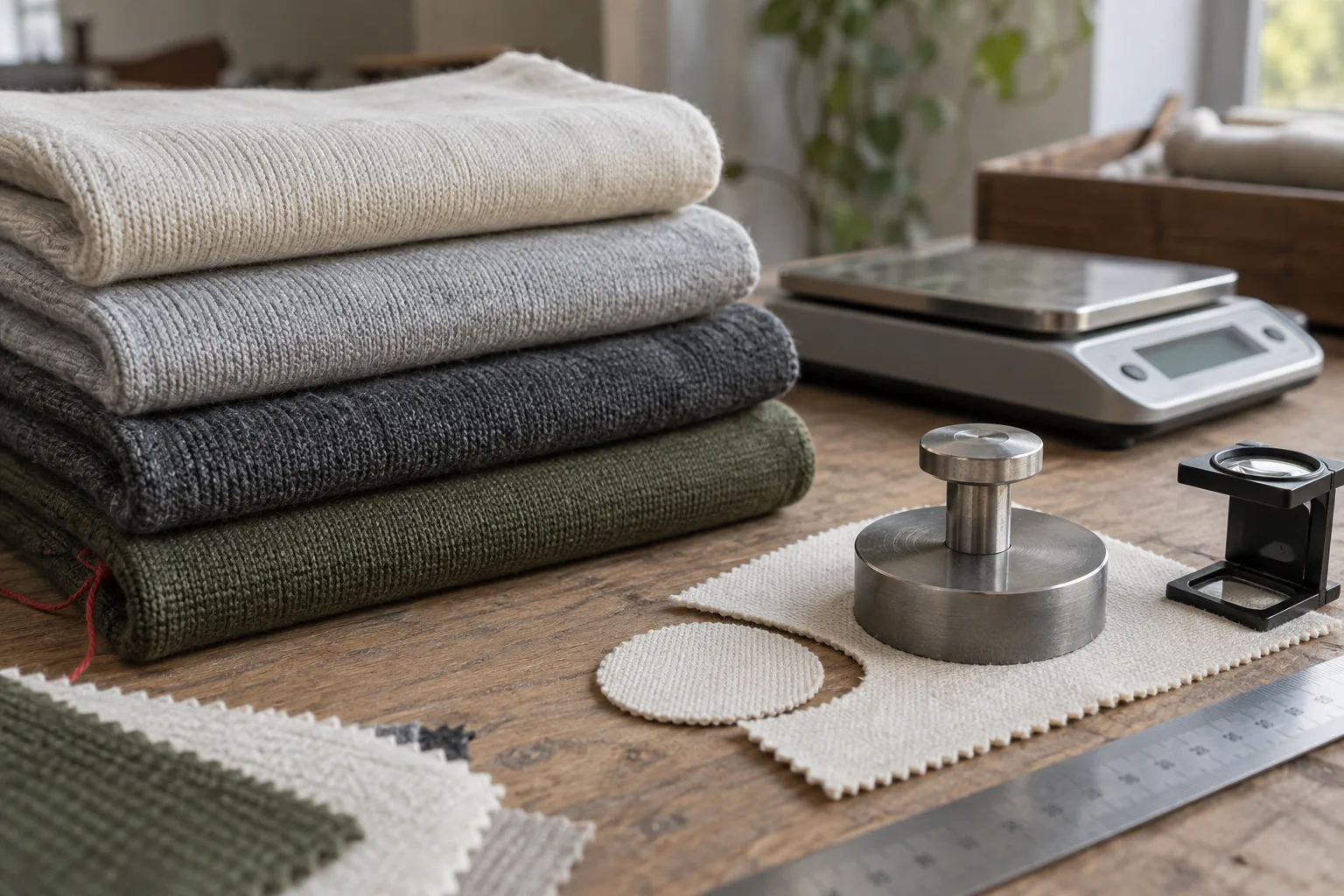
GSM means grams per square metre. It describes how much one square metre of fabric weighs, giving buyers and manufacturers a standard way to discuss fabric mass. It is useful because “light” and “heavy” are subjective. It is limited because weight alone does not tell you how a fabric will stretch, drape, breathe, recover, pill or feel against skin.
A 220 GSM single jersey, a 220 GSM interlock and a 220 GSM woven twill do not behave like interchangeable materials. Their yarns and structures distribute the same mass differently. Even two cotton jerseys with the same reported GSM can vary in density, surface, width stability and hand feel because of yarn count, knitting settings, dyeing and finishing.
How GSM is measured
A fabric test normally uses a circular cutter to remove a sample of known area. The sample is weighed on a calibrated scale, and the result is converted to grams per square metre. Several specimens should be taken from representative positions across the usable width, away from damaged edges or unusual tension. The average is more reliable than a single cut.
Moisture changes textile weight, so professional testing conditions samples at a controlled temperature and humidity. In day-to-day sourcing, a quick reading is still helpful, but it should not be treated as a laboratory certificate. Agree an acceptable range, such as a target with a percentage tolerance, and specify whether the value applies before or after washing.
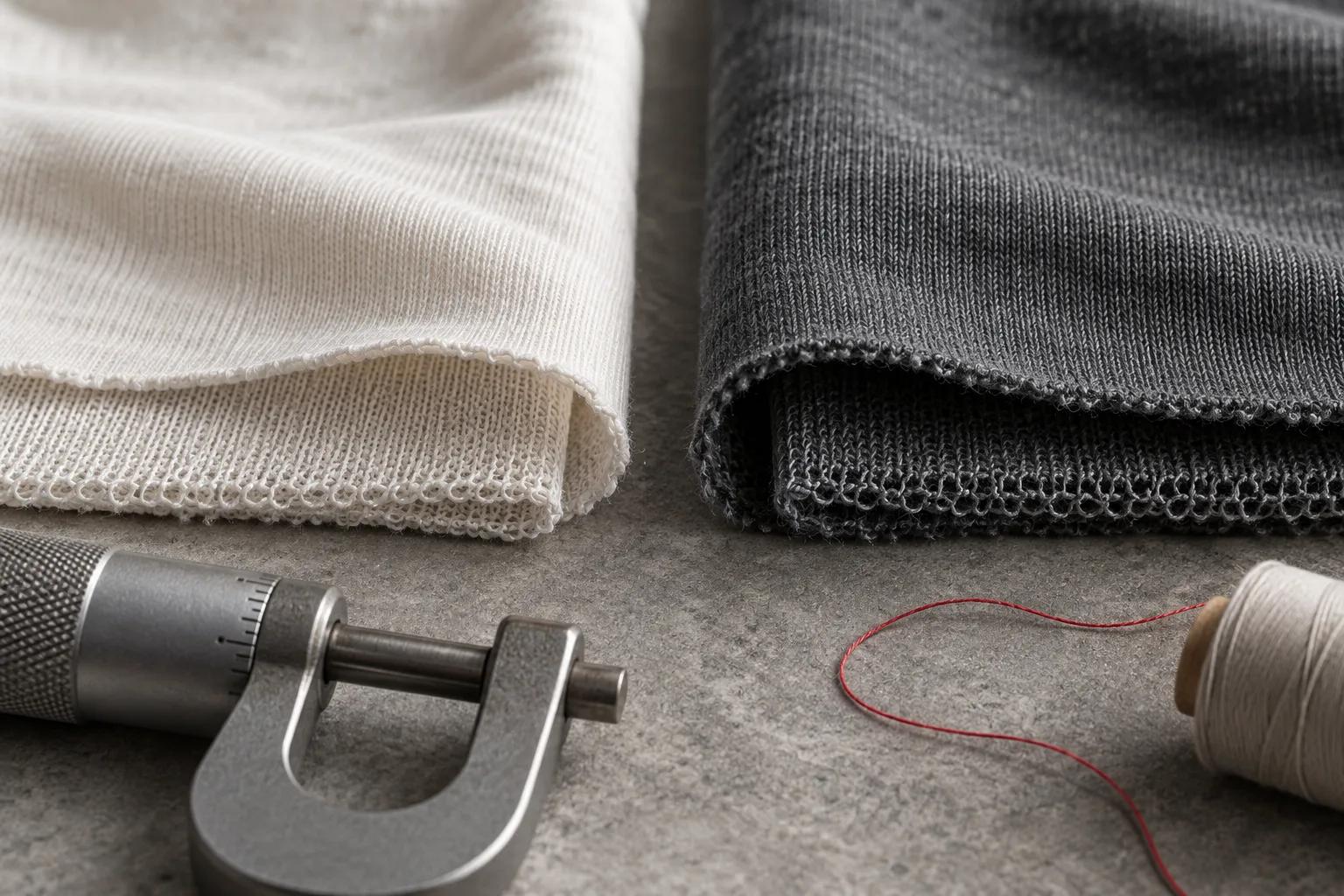
Useful weight ranges, with context
The ranges below are starting points rather than product rules. Fiber, structure and finish can move a fabric outside the expected feel. A compact combed cotton jersey may feel cleaner and more substantial than a heavier but loosely knitted alternative.
- Below 140 GSM: often used for very light tees, linings and warm-weather layers where airflow matters more than coverage.
- 140–180 GSM: a common light-to-regular T-shirt range, depending on yarn, opacity and intended fit.
- 180–240 GSM: substantial jersey for structured tees, polos and garments where a firmer silhouette is wanted.
- 240–320 GSM: heavier jersey, interlock, rugby fabric and light sweatshirt constructions.
- 320–500 GSM: common territory for fleece, heavy sweatshirts and dense knit outer layers, with wide variation in composition.
What changes when weight changes
Higher GSM often increases opacity, warmth and perceived substance, but it can also reduce airflow and increase drying time. It may create a cleaner oversized silhouette because the fabric collapses less, yet the same weight in a softer structure can drape heavily instead. For close-fitting products, stretch and recovery may matter more than mass.
Weight also affects consumption and freight. Fabric is usually purchased by weight or length, while garment consumption depends on marker area and usable width. A heavier fabric increases kilograms per garment even if the pattern is unchanged. That flows into material cost, carton weight and shipping. The final costing should therefore use the approved fabric, not only an early GSM estimate.
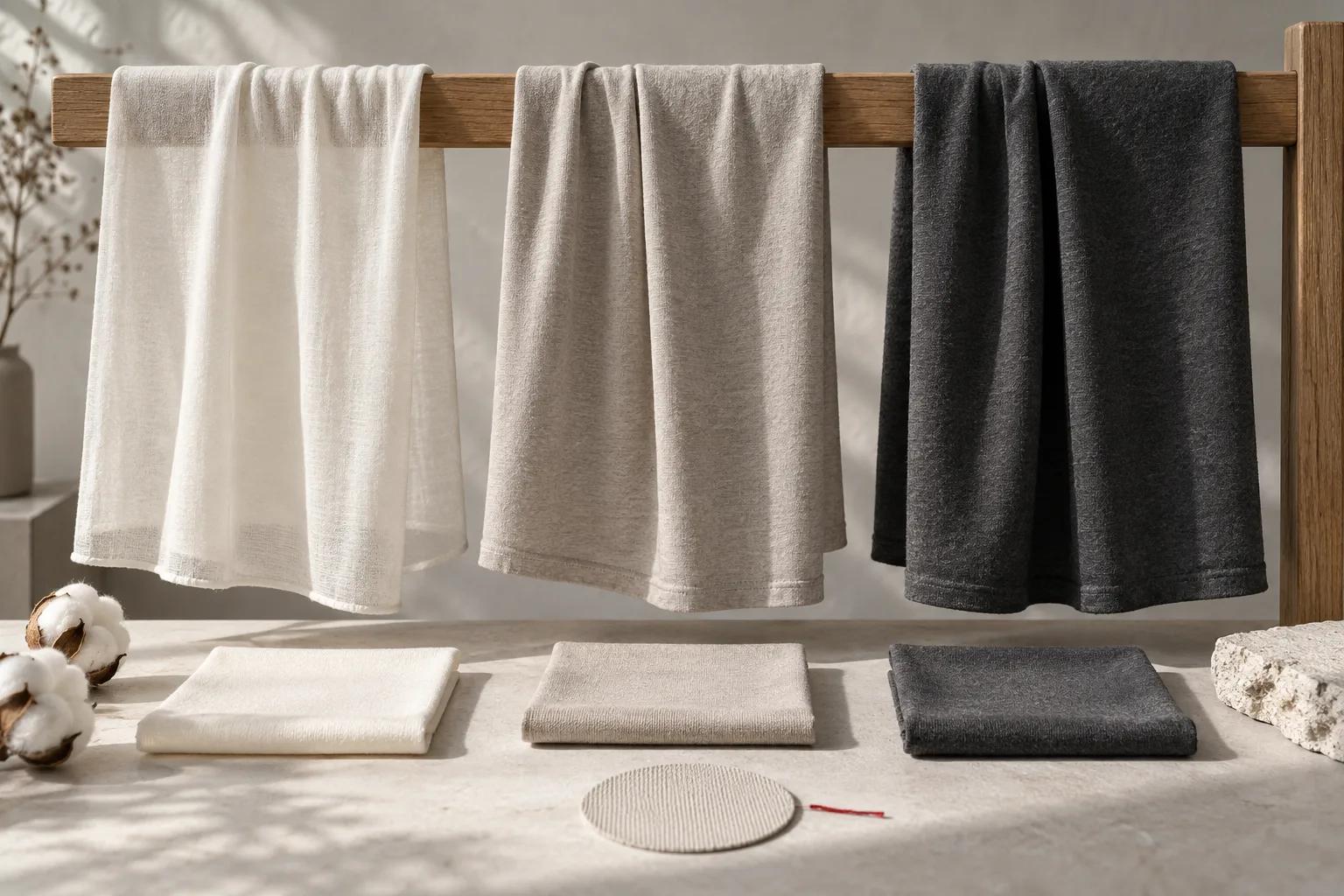
Pair GSM with the specifications that explain it
- Fiber composition: cotton, polyester, viscose, wool and blends behave differently at the same mass.
- Construction: name the knit or weave, such as single jersey, interlock, French terry, fleece, poplin or twill.
- Yarn and surface: record compact, slub, brushed, peached, mercerized or other visible and tactile effects.
- Stretch and recovery: state direction, percentage and whether stretch comes from structure or elastane.
- Dimensional stability: define shrinkage and spirality expectations after the agreed wash method.
- Performance: include pilling, colourfastness, abrasion or opacity where the product use makes them important.
If you are matching a reference garment, send a swatch or the garment itself and explain which qualities should be retained. A factory cannot reliably infer weight or composition from a photograph. If the material is open, describe the wearer, climate, fit, price level, care expectation and desired hand feel. That gives a sourcing team enough context to suggest constructions instead of guessing at a number.
Approve the fabric in the finished state
Dyeing, washing, brushing and compacting can change weight, width, handle and shrinkage. Review a representative swatch after the proposed finish, then test it in a garment sample. Check opacity under realistic light, recovery after wear, seam behavior, surface change after washing and how the material hangs on the body.
Record the approved fabric code, supplier, composition, construction, colour reference, usable width and GSM range in the tech pack. Keep a signed physical swatch when possible. The number helps control production, but the approved swatch communicates the full material result that a number cannot capture.